Guitar Pick Frame and 3D Shadow Overlay: Instant Visual Depth
If you work in music merchandising, event promotion, or creative branding, you understand that presentation is half the battle. A flat image of a guitar pick rarely captures the tactile reality of the object. That is where the Guitar Pick Frame and 3D Shadow Overlay pack comes into play. It is not just a decorative border; it is a design asset specifically engineered to bridge the gap between digital graphics and physical reality. By combining editable vector frames with photorealistic lighting effects, this collection allows you to create visuals that feel tangible and expensive without spending hours on manual rendering.
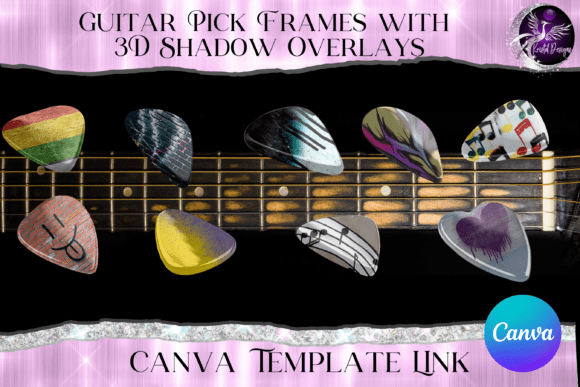
The core appeal of this kit lies in its ability to add dimension instantly. In the world of modern typography and graphic design, depth is often what separates amateur work from professional output. The pack includes nine distinct frame shapes that mimic the contours of standard guitar picks. These are not static images. Because they are delivered as Canva templates, the underlying structure remains fully editable. You can swap colors, resize elements, and adjust the layout to fit your specific needs. However, the real magic happens with the 3D Shadow Overlay. These overlays are professionally crafted to simulate how light interacts with a curved, plastic surface. When applied, they create a convincing illusion of the pick resting on top of your design, casting a realistic shadow that anchors the object to the background.
Practical Applications for Musicians and Designers
For musicians and small business owners, the utility of a Guitar Pick Frame extends far beyond simple decoration. Think about the visual language of rock, blues, or country branding. It is rugged, textured, and authentic. Using these frames allows you to maintain that aesthetic while keeping your workflow efficient. If you are designing merchandise mockups, placing your logo or band name inside a 3D Shadow Overlay frame instantly elevates the product. It moves the design from a flat concept to a "ready-to-sell" visual. This is particularly useful for e-commerce listings where customers need to visualize the physical product before buying.
Consider social media marketing. The algorithm favors content that stops the scroll. A standard rectangular post is easy to ignore, but a dynamic image featuring a floating guitar pick with a soft, realistic shadow draws the eye. This is where the asset functions as a creative font for your visuals—it provides the voice and tone. You can use these frames to highlight a new album release, announce a tour date, or simply brand your daily content. The versatility makes it a staple for content creators who need to produce high volumes of graphics without sacrificing quality. It works seamlessly for social media graphics, Instagram Stories, and even YouTube thumbnails where clarity and impact are paramount.
Enhancing Brand Identity and Visual Hierarchy
In brand identity design, consistency is king. A premium font establishes the textual tone of your brand, but the imagery supports it. The Guitar Pick Frame serves as a strong visual anchor that audiences can recognize over time. If you are a music teacher, a guitar shop owner, or a festival organizer, incorporating these frames into your logo design elements or marketing collateral creates a cohesive look. It tells your audience exactly what you do before they even read the text.
The 3D Shadow Overlay plays a critical role in visual hierarchy. By making the guitar pick frame appear to pop off the screen, you create a focal point. This allows you to layer information effectively. For example, you might place the most important information—such as the event name or discount code—inside the frame, while secondary details sit flat on the background. This contrast in depth helps guide the viewer's eye exactly where you want it to go. It is a subtle technique, but it significantly improves readability and engagement. Unlike complex script fonts or handwritten fonts that can sometimes clutter a design, the 3D frame adds interest without competing for attention. It supports the message rather than obscuring it.
Streamlining Your Design Workflow
One of the biggest challenges for entrepreneurs and hobbyists is the technical barrier to entry. Many high-end design assets require advanced software like Photoshop or Illustrator and a steep learning curve. This pack eliminates that friction. Because it is built for Canva, it is accessible to anyone with an internet connection. You do not need to understand layers, blending modes, or lighting angles. The hard work has already been done for you. You simply open the template, insert your image or text, and the 3D Shadow Overlay does the rest.
This ease of use makes it an ideal solution for rapid prototyping. If you are a graphic designer pitching a concept to a band, you can mock up several variations in minutes. If you are a blogger writing about music gear, you can create custom featured images that look tailored to your content. The pack acts as a bridge between web design and print. You can use the designs for digital ads, but they are also high-resolution enough for packaging design or physical flyers. This versatility ensures that your investment pays off across multiple channels, from editorial design to merchandise tags.
Final Thoughts on Versatility and Value
Ultimately, the Guitar Pick Frame and 3D Shadow Overlay is about adding perceived value to your work. In a crowded digital landscape, the details matter. The realistic lighting and professional finish of these frames signal quality to your audience. They suggest that you care about the presentation, which translates to trust. Whether you are pairing these frames with a bold sans serif font for a modern look or a vintage serif font for a classic vibe, the result is a polished, professional image.
For anyone involved in the music industry or creative arts, this is a practical tool that solves a common problem: how to make digital graphics feel real. It is a straightforward, effective way to enhance your commercial font usage and overall design strategy. By integrating these editable templates into your workflow, you save time, reduce design frustration, and produce visuals that truly resonate with your audience. It is a small addition to your toolkit that makes a significant difference in the final output.