Streamline Your Legacy with a Customizable Last Will and Testament Template
Thinking about estate planning can feel overwhelming, often conjuring images of dense legal jargon and impersonal forms. But what if the process of documenting your final wishes could be approached with clarity, organization, and even a touch of personal care? A well-designed Last Will and Testament Template transforms a daunting task into a manageable project. It’s not just a legal form; it’s a structured framework designed to bring peace of mind, ensuring your intentions are clearly laid out and easily understood by your loved ones. This approach moves beyond basic paperwork, offering a thoughtful system for one of life’s most important documents.
The Anatomy of an Effective Estate Planning Document
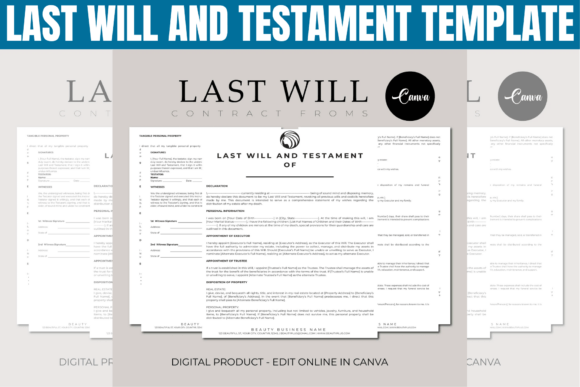
A quality template is more than blank lines. It’s built on principles of modern typography and clear visual hierarchy. Think of it as a piece of editorial design for personal use. The structure guides your eye naturally from one section to the next—from appointing an executor to detailing asset distribution. The use of a clean serif font for body text ensures long-form readability, a critical factor when dealing with detailed instructions. This isn’t about flashy design; it’s about functional brand identity for your personal documents, creating a sense of order and professionalism that reflects the seriousness of the content.
The real power lies in its customizability. Using a platform like Canva, you’re not just filling in a static PDF. You have the flexibility to adjust colors to match your personal filing system, modify fonts if a different sans serif font suits your eye better, or add specific sections relevant to your unique situation. This turns a generic legal testament template into a personalized tool. For small business owners or creators, this adaptability is key. You can ensure your estate plan documents align with the organizational systems you already use for your business or creative projects, maintaining a cohesive approach to management across all areas of your life.
Practical Applications Beyond the Basics
While the primary function is legal documentation, the principles embedded in a good template have broader applications. The discipline of clear communication, logical organization, and attention to detail required for a will is the same discipline needed in brand identity guidelines, project briefs, or content calendars. Using a structured template for your will can actually train your mind to approach other complex projects with a similar methodical clarity. It’s an exercise in comprehensive planning that benefits every facet of your professional and personal life.
For those who work with clients—designers, marketers, consultants—understanding the value of a well-organized digital asset is second nature. A Last Will and Testament Template serves as a prime example of a design asset that saves immense time and reduces cognitive load. Instead of starting from a blank page, you begin with a proven structure. This is the same principle you apply when using Canva templates for social media graphics or packaging design. The goal is efficiency without sacrificing quality or personalization. By applying this mindset to personal legal documents, you’re practicing the same strategic resource management you use in your business.
Making It Your Own: A Guide to Personalization
The process of customizing your template is straightforward and empowering. First, consider the visual tone you want to set. Do you prefer the classic, authoritative feel of a traditional serif font, or the clean, modern accessibility of a sans serif font? The template provides the foundation, but you make the aesthetic choice. This is where your inner designer comes out to play. Adjusting the font size and weight can create a clear visual hierarchy, making headings, subheadings, and body text distinct and easy to navigate. This isn’t just about looks; it’s about enhancing the document’s usability for your executor and beneficiaries.
Next, think about the content flow. While the template provides all the necessary legal sections, you can often add or remove elements to better suit your circumstances. Perhaps you need a more detailed section for digital assets, like social media accounts or cryptocurrency holdings. Or maybe you want to include a personal letter to your loved ones as an addendum. The ability to drag and drop text boxes and elements means the document can grow with your needs. When you’re finished, saving it as a PDF locks in your design and creates a universally accessible file. Remember, while the template is editable in Canva, the final signed document should be a static PDF to ensure its integrity. This final step mirrors the process of exporting a logo design or a final web design mockup—you’re creating a fixed, shareable version of your work.
Choosing to organize your estate plan using a thoughtful template is an act of care. It provides a clear, professional framework that ensures your wishes are documented with the precision they deserve. By leveraging the tools of modern typography and digital customization, you create a document that is not only legally sound but also personally meaningful and organized—a final testament to a life thoughtfully planned.